
Hotline:
Hotline:
联系人:CHINA SUPREME PEPTIDE
电 话:+852 5335 7470
地 址:Building C3, Jiangsu Life Science and Technology Innovation Park, No.9 Weidi Road, Xianlin University City, Xianlin Street, Qixia District, Nanjing City, Jiangsu Province, China
The chemical synthesis of peptides is a very special branch of organic synthesis, and currently there are mainly two methods: liquid-phase synthesis and solid-phase synthesis.
Liquid phase synthesis is a classic peptide synthesis method, generally using stepwise synthesis or fragment condensation methods. The stepwise synthesis method usually starts from the C 'end amino acid of the chain and repeatedly adds a single alpha amino protected amino acid to the continuously increasing amino acid composition. Fragment condensation generally involves first dividing the target sequence into fragments, then gradually synthesizing each fragment, and finally condensing each fragment according to the sequence requirements. The advantages of liquid-phase synthesis are that the intermediate products can be purified at each step, the physicochemical constants of the intermediate products can be obtained, non amino acid modifications can be freely performed, and amino acid deletions can be avoided. The disadvantages are that it is time-consuming and labor-intensive.
Solid phase synthesis is the process of covalently connecting the carboxyl group of the first amino acid of a target peptide to a solid support (resin), and then starting from the amino group of this amino acid, acylating it with the carboxyl group of an adjacent amino acid (protected by the amino group) to form a peptide bond. Then, the amino group of the resin peptide containing these two amino acids is deprotected and reacted with the carboxyl group of the next amino acid, repeating this process until the target peptide is formed. Its advantages include simplifying the post-processing operations of each reaction step, avoiding losses caused by manual operations and material transfer, high yield, and the ability to achieve automation; The disadvantage is that the intermediate products in each step cannot be purified, and a large excess of amino acids must be used for feeding. The purity of the crude product is not as good as that of the liquid-phase product, and reliable separation methods must be used for purification.
Liquid phase synthesis and solid-phase synthesis each have their own advantages and disadvantages, and suitable processes should be selected according to the actual needs of synthesis. Generally speaking, liquid-phase synthesis is more suitable for synthesizing short peptides; Solid phase synthesis is more suitable for synthesizing medium and long peptides. Of course, the two methods can also be combined and applied, such as synthesizing short peptide fragments using liquid-phase methods, and then applying the fragments to solid-phase synthesis.
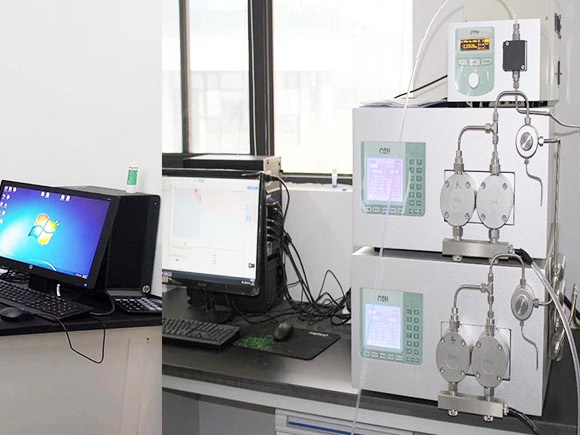
In the process of peptide synthesis, some heteropeptides with similar structures to the target peptide are generated, such as diastereomers caused by amino acid racemization, missing peptides caused by partial unconnected amino acids, and broken peptides caused by peptide bond cleavage. Therefore, it is necessary to consider selecting reliable separation and purification methods to achieve the required purity of peptides. The purification of peptide drugs usually uses chromatographic methods, but in some cases, common purification methods in organic synthesis (such as recrystallization) may also be applicable.
Hotline